


 4 minutos de lectura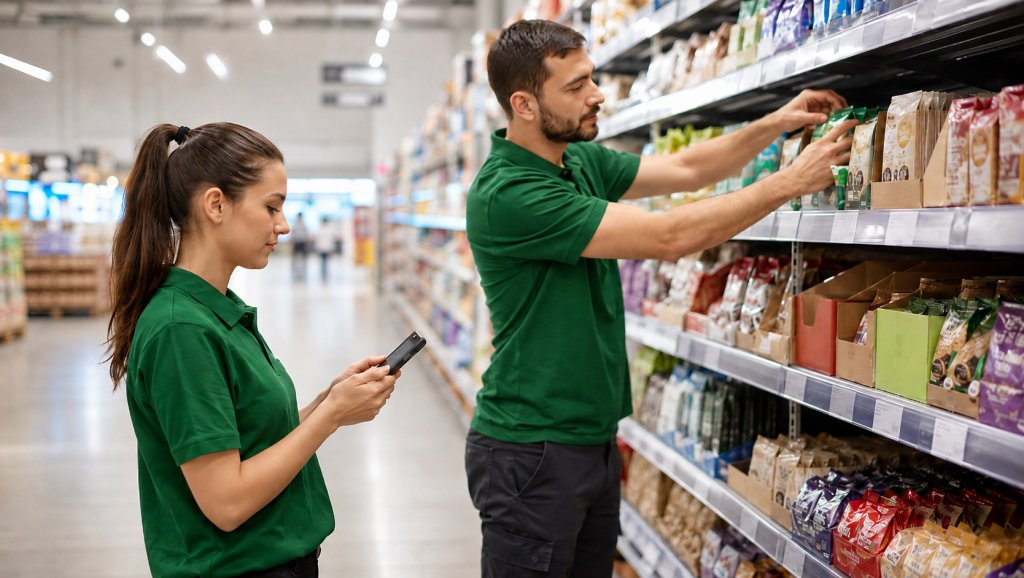
US retailers will spend USD 113 billion on technology in 2026, up from USD 106 billion in 2025 (Forrester, US Tech Forecast 2026 For Retail). Budgets grow every year. Even so, the execution problems on the sales floor stay much the same as always.
Retail technology adoption only creates value when it changes how the store team works, right where the customer decides what to buy.

Budget was never the problem
Spending on platforms, dashboards, and apps has climbed for years. Even so, a store supervisor still spots an out-of-stock by walking the aisle, not by looking at a screen. That gap between the technology a retailer buys and what actually happens in the store is the real challenge for the sector.
McKinsey explains it clearly in Crafting a fit-for-future retail operating model: most retailers have responded to industry shifts with incremental changes rather than rethinking their operating model. As a result, legacy structures and processes stay in place even though the landscape has changed completely, which keeps them from moving at the pace of the market.
The pressure is real, too. 71% of retail executives with stronger cost control report a competitive edge (Deloitte, 2026 Retail Industry Outlook). So every dollar that goes into technology has to show results in the operation, not just sit in the budget. We dug into this in our piece on why retail tech investment is not enough to see results.
Buying the technology is the easy part
Choosing the platform and signing the contract is the easy part. A rollout usually starts with enthusiasm: the project gets announced, the team gets trained, and a go-live date is set. Then comes the part almost no one budgets for: getting the store team to use it every day.
Take a typical case. A chain rolls out a very complete audit app. Six months later, several store managers are still writing on paper and uploading photos whenever they get a free moment. The tool works fine, but adoption never reached the floor. And without adoption, the data meant to guide a decision simply never appears.
The reason is rarely the team’s bad will. It is almost always friction, which shows up in details that seem minor:
- One extra screen between the task and its record.
- A process that competes with serving the customer.
- A tool built for the office, not for someone working the sales floor.
What retail technology adoption looks like when it works
So the technology that actually changes something on the sales floor shares certain traits. It is mobile and simple, built for someone working on their feet, with their hands full and little time to learn new screens. It delivers context right when it is needed, without asking the associate to leave the floor to look up a manual. And it leaves a trail: what happens in the store stays visible to whoever makes the next decision, without anyone having to chase down the information via chat or a call.
This is where a retail execution platform like Frogmi adds value. Instead of adding another app to the stack, it brings tasks, audits, communication, and documentation together in one place, built so the store team uses it without friction. When the tool feels natural on the floor, everyone sees the value: the store associates save steps in their day, and the head office sees what happens in every store. Information flows without anyone having to push, and the adoption barriers that stall most projects start to fall.
Retail technology adoption starts on the sales floor
After your company’s last technology rollout, what really changed in the store? Does the floor team work differently, or did everything stay the same with one more tool in the background?
Plenty of times a technology dazzles in the demo and sounds flawless as a concept, but it falls apart once it reaches the sales floor. That is why the team does not work differently: the decision fell for the tool and forgot to ask whether anyone would actually use it. So when the budget is on the table, it is worth weighing each option by its adoption potential and the friction it removes from daily operations. That is the difference between a purchase that impresses and one that changes the sales floor. See how Frogmi supports retail teams through that change.


